

Kazakh Cuisine: Meat, Milk and the Steppe Dastarkhan
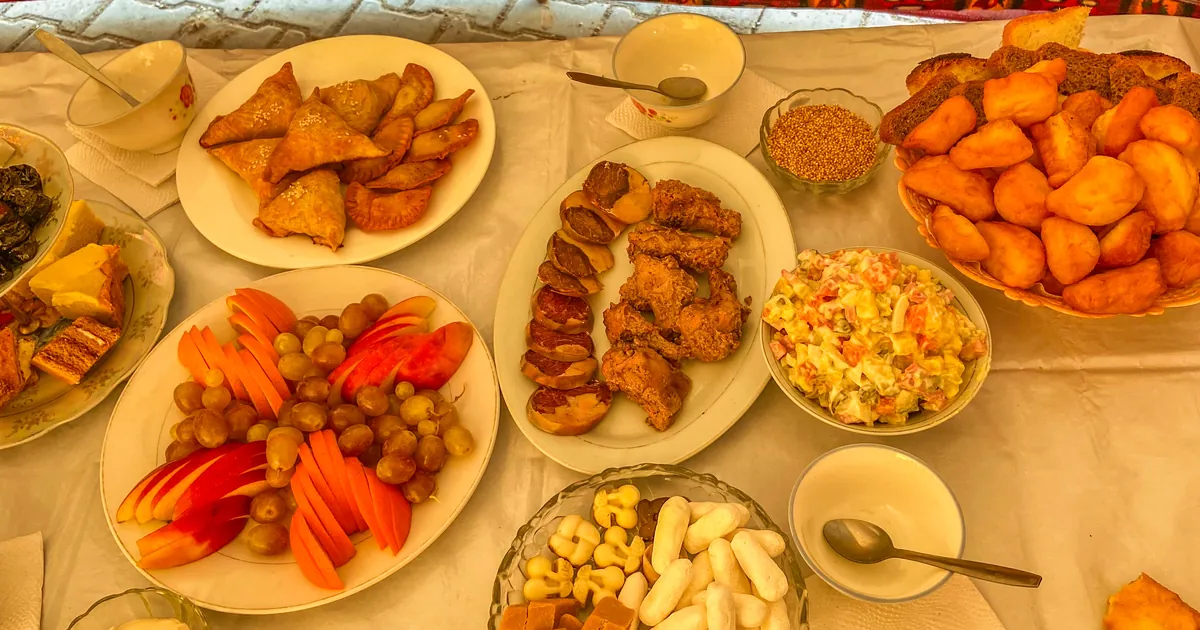
Kazakh cuisine grew out of the life of steppe herders. For centuries Kazakhs kept sheep, horses and camels, and meat and milk became the core of the diet. Grain and flour took a noticeable place later, and the cuisine reached its modern form once people settled. What sets it apart: large pieces of boiled meat, plenty of soured dairy, and dough that is fried in a cauldron or boiled.
The nomadic way of life
On the road you need food that keeps. That is why meat was salted, dried and smoked, and milk was turned into things that travel easily: kurt, irimshik, katyk. Meat is most often boiled in large pieces. Nomads did not raise poultry; birds were only game for hunters.
Meat
• Beshbarmak — boiled meat with broth and thinly rolled dough, the best known dish of the cuisine.
• Kazy — horse meat sausage.
• Kuyrdak — offal or meat fried with onion.
• Shorpa — a rich meat broth served with the meat and onion.
• Zhal and zhaya — cured horse fat and meat, offered to honored guests.
Dairy and drinks
• Kumis is fermented mare's milk, shubat is fermented camel's milk.
• Ayran, katyk, kaymak and sary may are familiar items on the table.
• Kozhe is ayran with boiled grains; Nauryz Kozhe, a soup of seven ingredients, belongs to the Nauryz holiday.
• Zhent — a sweet mix of crushed millet with irimshik, sugar, raisins and butter.
Dough and bread
Baked goods are either fried or baked in a tandyr oven. Baursak (fried pieces of yeast dough) and shelpek (thin fried flatbreads) are made in a cauldron, so they suit both the road and a feast. The dough is also shaped into manti and tushpara, and baked into samsa.
The festive dastarkhan
Food is served on a low table, the dastarkhan. The host carves the meat and gives the best pieces to honored guests or children; guests of different age and standing have their traditional cuts. Baursak and shelpek decorate the table at any celebration, and the meal begins and ends with tea.
Features and tips
1. Meat is boiled in large pieces, for beshbarmak as well as shorpa.
2. The dough for beshbarmak is rolled thin and boiled.
3. Soured dairy drinks traditionally accompany the main meal.
4. Baursak and shelpek are made in a cauldron, which suits both travel and feasts.
5. Tea is strong, taken with milk or cream, and poured only half way up the bowl: a small pour is a sign of respect, as the host keeps topping it up hot.
Recipes on Oshxonam
• Beshbarmak
• Kuyrdak
• Offal Kuurdak
• Kespe
• Kazakh Shorpa with Lamb
• Lamb and Pumpkin Manti
• Baursak
• Shelpek
• Kazy
• Nauryz Kozhe
• Zhent
• Tushpara
Sources:
Wikipedia (ru) — «Казахская кухня»: https://ru.wikipedia.org/wiki/Казахская_кухня
Wikipedia (en) — «Kazakh cuisine»: https://en.wikipedia.org/wiki/Kazakh_cuisine
Wikipedia (tr) — «Kazak mutfağı»: https://tr.wikipedia.org/wiki/Kazak_mutfağı