

Turkish Cuisine: From Breakfast Table to Sweet Finish
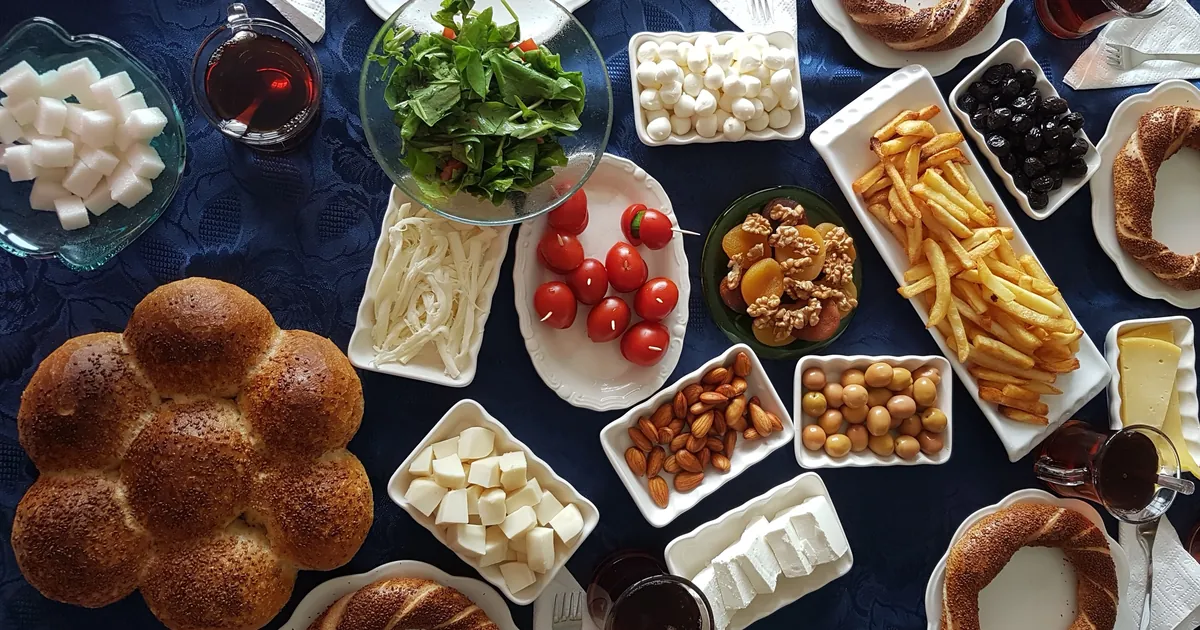
Turkish cuisine grew up where Anatolia, the Balkans, the Mediterranean and the Middle East meet, and it carries the legacy of Ottoman court cooking. Its backbone is yogurt, white cheese, bulgur and rice, legumes, lamb, eggplant, olives and olive oil. Food changes noticeably from region to region, but the table is built around bread, small plates and tea.
Breakfast
A Turkish breakfast (kahvaltı) is a whole spread: cheese, olives, eggs, tomatoes, cucumbers, butter, jam, honey, kaymak, pastries and simit. The signature dish is Menemen, eggs cooked with tomatoes and peppers. Tea is always served. The word kahvaltı literally means "before coffee".
Meze and olive oil vegetables
Meze is a selection of small dishes: olives, cheese, pickles, cold yogurt-based dips. They are shared, and nobody is expected to finish every plate.
• Cacık — yogurt with cucumber and herbs
• Sigara böreği — thin crisp rolls filled with cheese
• Yaprak sarma — stuffed vine leaves
• Çoban Salatası — a fresh vegetable salad
• Lentil Patties (Mercimek Köftesi) — a lentil appetizer
A tradition of its own is zeytinyağlı: vegetables sautéed in olive oil, stewed with tomatoes and served cold, without meat. In summer they are eaten instead of soup, before or after the main course. The classic is İmam bayıldı, eggplant with an onion and tomato filling.
Street food and baked goods
• Simit — a sesame-covered ring of bread sold by street vendors across the country
• Lahmacun — a thin flatbread with spiced minced meat, eaten with onions, parsley and lemon
• Gözleme with spinach and cottage cheese — a thin filled flatbread
• pide — a boat-shaped flatbread topped with meat, cheese or spinach
• döner — meat in a flatbread to eat on the go
Regions
The west (Aegean, Marmara and Mediterranean coasts) is rich in vegetables, herbs and fish, and olive oil is the main cooking fat. The Black Sea is known for fish, above all hamsi (anchovy), and corn dishes. The southeast is home to many kebabs such as Adana kebab, to meze and to dough-based desserts like Baklava. Central Anatolia is known for keşkek, gözleme and Turkish manti, especially the Kayseri kind. Legumes such as Kuru fasulye anchor everyday home cooking.
Tips and features
1. A home meal usually opens with soup, followed by a vegetable dish or legumes, served with pilaf, pasta or bulgur, plus a salad or cacık.
2. Olive oil vegetables are served cold and many cooks find they taste best after resting.
3. Bread is always on the table, and so is a shaker of pul biber, the red pepper flakes.
4. Most Turkish cheeses are made from sheep's milk, and yogurt goes into a wide range of dishes.
5. Desserts come with pistachios or walnuts, and sometimes kaymak to balance the sweetness.
6. Tea is drunk at breakfast and after dinner, with or without sugar: Turkish Tea.
Recipes on Oshxonam
• Menemen
• Simit
• Lahmacun
• Gözleme with spinach and cottage cheese
• Sigara böreği
• İmam bayıldı
• Yaprak sarma
• Çoban Salatası
• Cacık
• Lentil Patties (Mercimek Köftesi)
• Adana kebab
• Turkish manti
• Kuru fasulye
• Baklava
• Turkish Tea
Sources:
Википедия — «Турецкая кухня»: https://ru.wikipedia.org/wiki/Турецкая_кухня
Wikipedia — «Turkish cuisine»: https://en.wikipedia.org/wiki/Turkish_cuisine
Wikipedia — «Meze»: https://en.wikipedia.org/wiki/Meze