

Kyrgyz cuisine: beshbarmak, kumis and a hospitable table
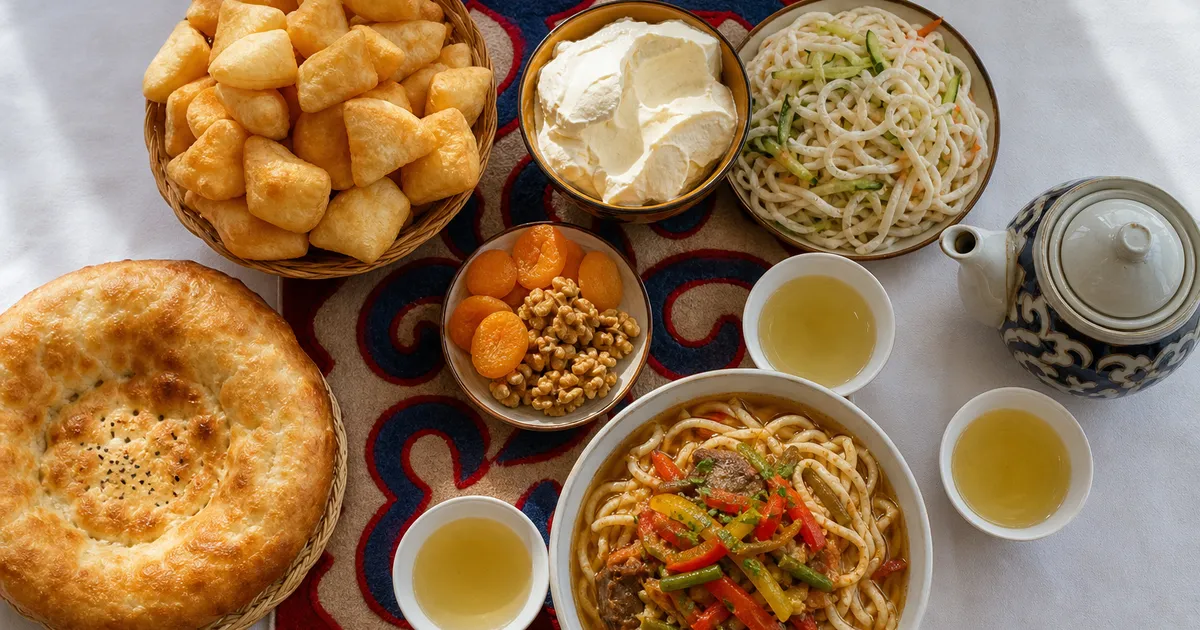
Kyrgyz cuisine belongs to the Kyrgyz, a people with a nomadic herding tradition. It is close to the foods of neighboring Turkic peoples, especially Kazakh and Altai, yet it has its own dishes and customs. The diet follows the seasons: dairy and plant foods dominate in summer, meat and flour dishes in winter. North and south cook differently too: in the north beshbarmak is the main festive dish, while in the south plov is more common.
Meat and beshbarmak
Beshbarmak is called the national dish. The name means "five fingers" because it is eaten by hand. Mutton, beef or horse meat is boiled for hours in a kazan, chopped finely and served over noodles with an onion sauce, while the broth comes separately in bowls.
• Kuurdak — a meat dish, one example of cooking meat in a way suited to keeping it.
• Chuchuk — horse-meat sausage; horse meat is regarded as a delicacy.
• Shishkebek — marinated mutton grilled over coals, usually served with raw onion.
• Shorpo — a meat soup.
Dough, bread and fried treats
Flour dishes are plentiful: bread baked in a tandyr oven, noodles, manty, zhupka, kesme and kattama flatbreads. Some came from neighbors, such as ashlyan-fu and samsa.
• Oromo — a steamed rolled dough dish.
• Ashlyan-fu — a cold noodle dish in broth, associated with Karakol.
• Boorsok — fried pieces of dough, eaten with tea or dipped in honey.
Dairy and drinks
Dairy appears fresh and processed: ayran, kurut, kaymak, suzma and butter. The signature drink of nomadic culture is kumis, made from mare's milk (in Batken also from cow's milk). Fresh kumis is a summer product, roughly May to August, and is sold along mountain roads. Maksym is a lightly fizzy grain drink: malt is boiled, cooled and fermented, then served chilled, especially in summer. Tea in the north is brewed with milk, in the south without.
The festive table and hospitality
For celebrations, family events and memorial meals a sheep is traditionally slaughtered. Each bone with meat has its meaning and goes to a guest according to standing. When mutton is served, the head is placed before the most honored guest, who cuts it and offers pieces to the others. Bread is regarded as sacred, so a guest is always offered at least bread, usually with tea.
Features and tips
1. Meat for beshbarmak is boiled in a kazan with water and no vegetables, for several hours (2.5 to 3 hours).
2. The meat is chopped finely, a sign of respect to guests, especially elders.
3. Serve beshbarmak on a large platter with the broth on the side in bowls.
4. Boorsok goes well with tea, honey, kaymak or butter.
5. Kumis and maksym are seasonal drinks, served chilled.
6. Bread always goes on the table with the meat: no guest should leave without being fed.
Recipes on Oshxonam
• Ashlyan-fu
• Oromo
• Boorsok
• Maksym
• Shurugan
• Zhansak
• Kuurma-chay
• Zhupka with milk
• Hoshan
• Shishkebek
Sources:
Wikipedia — «Киргизская кухня» (Russian): https://ru.wikipedia.org/wiki/Киргизская_кухня
Wikipedia — «Kyrgyz cuisine»: https://en.wikipedia.org/wiki/Kyrgyz_cuisine
Wikipedia — «Бешбармак» (Russian): https://ru.wikipedia.org/wiki/Бешбармак